
In many classrooms, maths is still primarily taught at desks, through written tasks and individual work.
While this approach can be effective, it does not always engage all learners or support deep understanding.
The Nature of Mathematical Learning
Mathematics is not solely abstract. It is visual, spatial, and often physical in nature.
Approaches that allow pupils to experience mathematical concepts—rather than simply record them—can support a more secure understanding.
What Active Maths Looks Like in Practice
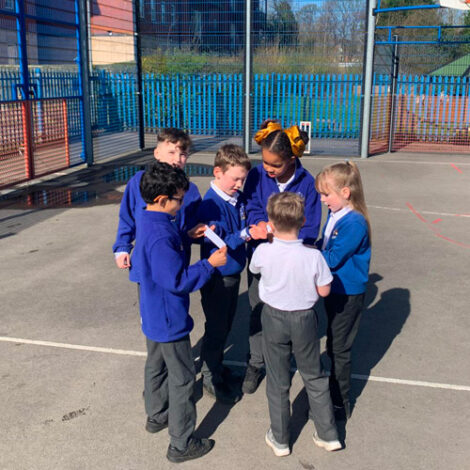
Active maths lessons incorporate movement into the learning process. Pupils may represent number lines physically, engage in structured games, or explore problem-solving through movement.
These approaches do not replace traditional methods but complement them, offering additional ways to access and apply knowledge.
Impact on Engagement and Confidence
When pupils are actively involved in lessons, engagement often increases.
This can lead to greater confidence, particularly for pupils who may find traditional approaches challenging. A more positive experience of maths can, in turn, support progress over time.
Maintaining Structure and Purpose
Active learning is most effective when it is carefully planned.
Movement should always be purposeful and directly linked to the learning objective. Clear routines and expectations ensure that lessons remain focused and productive.
Getting Started
Introducing active maths does not require a complete change in practice. Small adjustments, such as incorporating short activities or replacing a single task, can provide a starting point.
For teachers seeking practical examples, structured resources can support this transition.
The Teach Active free learning pack includes ready-to-use maths activities that can be implemented immediately, helping to bring learning beyond the desk.